
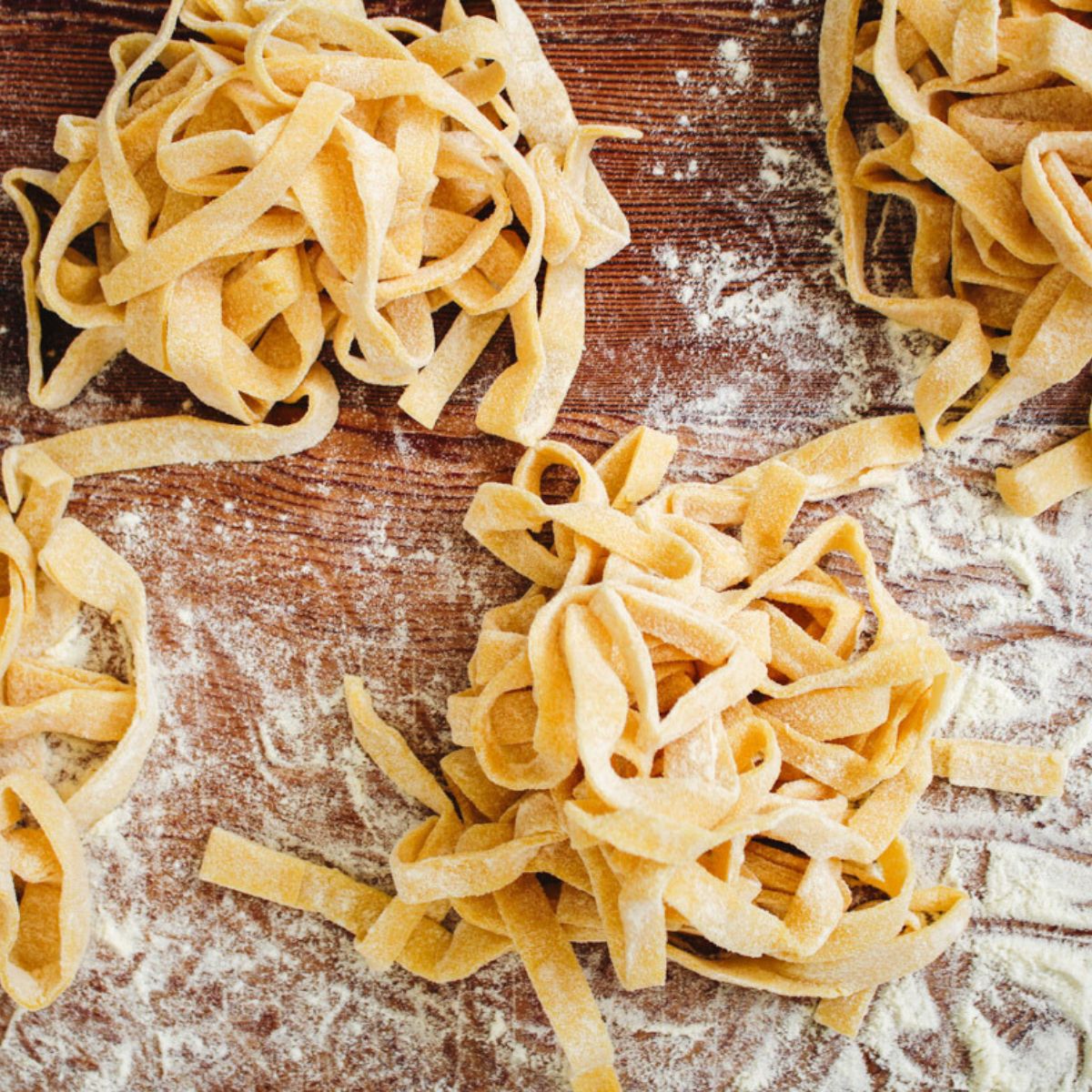
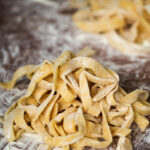
Learn how to make egg tagliatelle at home with this simple, authentic Italian recipe. This fresh tagliatelle pasta turns out silky, tender, and perfect for all your favorite tagliatelle recipes.
If you want more simple step-by-step pasta recipes, check out my homemade ravioli and my homemade pici pasta!
This article contains affiliate links which supports us at no extra cost to you.
Jump to:
Hi! I can’t wait for you to try this homemade egg tagliatelle because once you make fresh pasta from scratch, you understand why Italians get so passionate about it. The dough feels soft under your hands, the sheets roll out beautifully, and the final tagliatelle noodles cook up with the perfect bite.
I grew up watching fresh tagliatelle being made on wooden boards, and this method is exactly what we still use today. If you’ve ever wondered how to make tagliatelle or wanted a true tagliatelle pasta recipe, this is the one you’ll rely on.
Ingredients (Serves 4–6)
- ½ kilo semolina flour: I used semolina flour. Use 00 flour or all-purpose if you would prefer. Half kilo would be 1.1 lbs and if you want it in cups, ½ kilo of flour is about 4 to 4.25 cups, depending on how tightly it’s packed.
- 10 egg yolks: Use only the yolks. You could make a different pasta with the egg whites or even make a meringue.
- Salt: I like to use sea salt or you could use kosher salt.
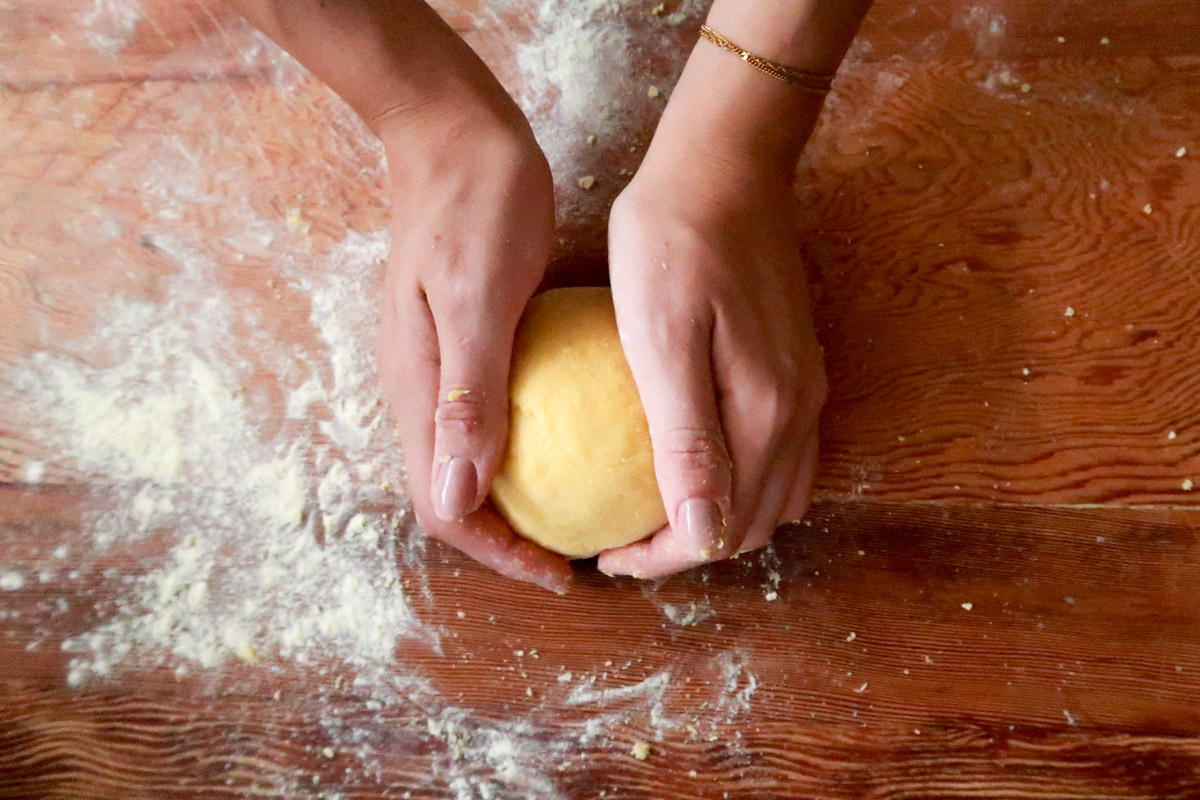
This ratio is the classic base for homemade tagliatelle. You can double it easily.
How to Make Tagliatelle (Step by Step)
- Step 1-3: Make the dough Separate the egg yolks from the egg whites and place yolks in a bowl. Add the flour and salt to the bowl.
- Step 4: Pour the egg yolks into the flour and stir with a wooden spoon to combine and bring dough together. When it gets shaggy, use your hands to knead it. The dough will feel firm at first.
- Step 5: When it gets shaggy, use your hands to knead it. Dump the dough out onto a clean working surface and begin to knead the dough. The dough will feel firm at first.
- Step 6: Knead until smooth Knead for 8–10 minutes until the dough becomes smooth, elastic, and slightly springy.

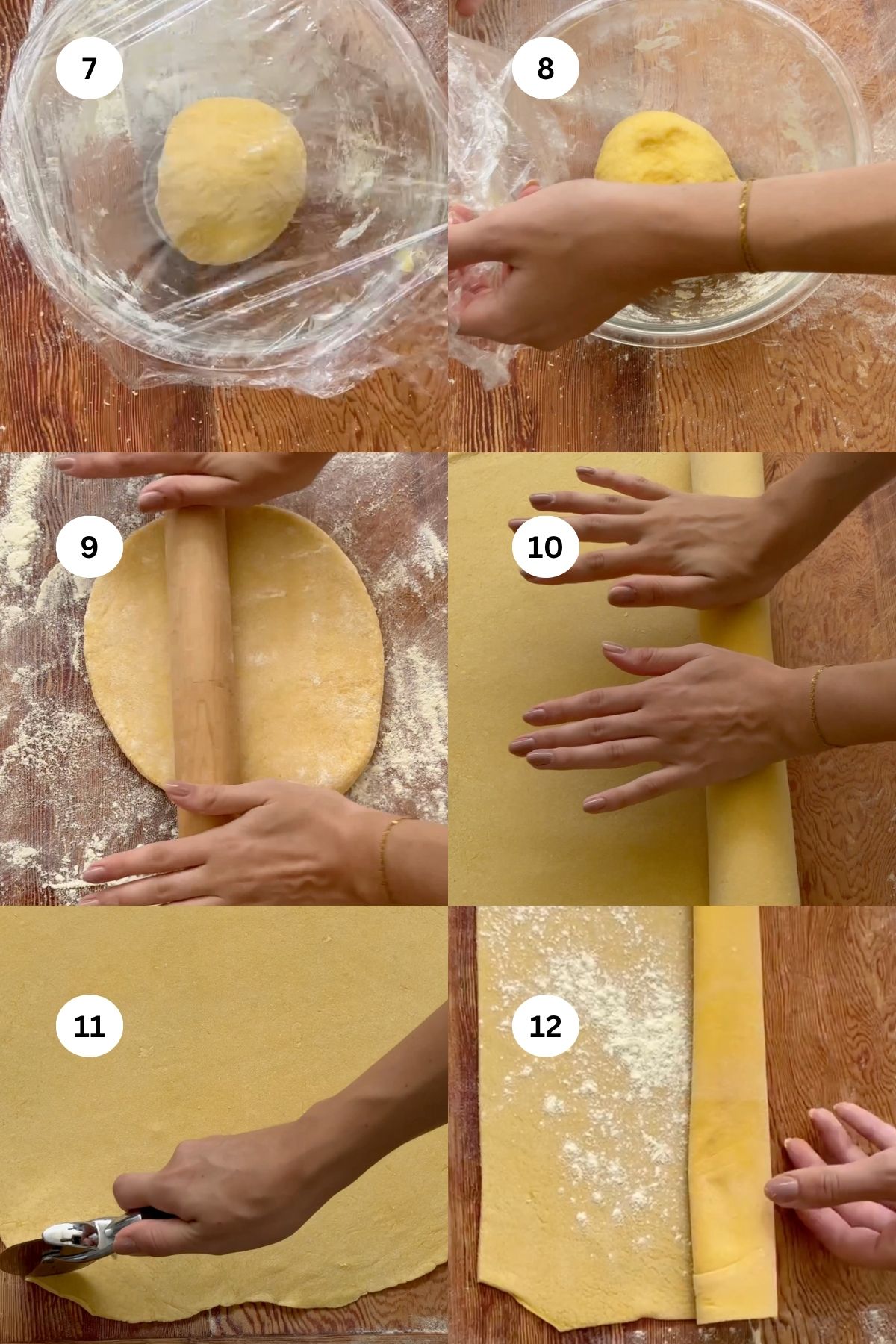
- Step 7: Rest Wrap the dough and let it rest in the refrigerator for one hour. This helps you roll it thin.
- Step 8: Take the dough from the refrigerator and remove the plastic wrap.
- Step 9-10: Roll out the dough. Dump the dough onto a lightly floured work surface and use a rolling pin to begin rolling out the dough. Use a pasta machine or rolling pin. Roll into long, thin sheets. For tagliatelle, stop at about setting #5 on most pasta rollers.
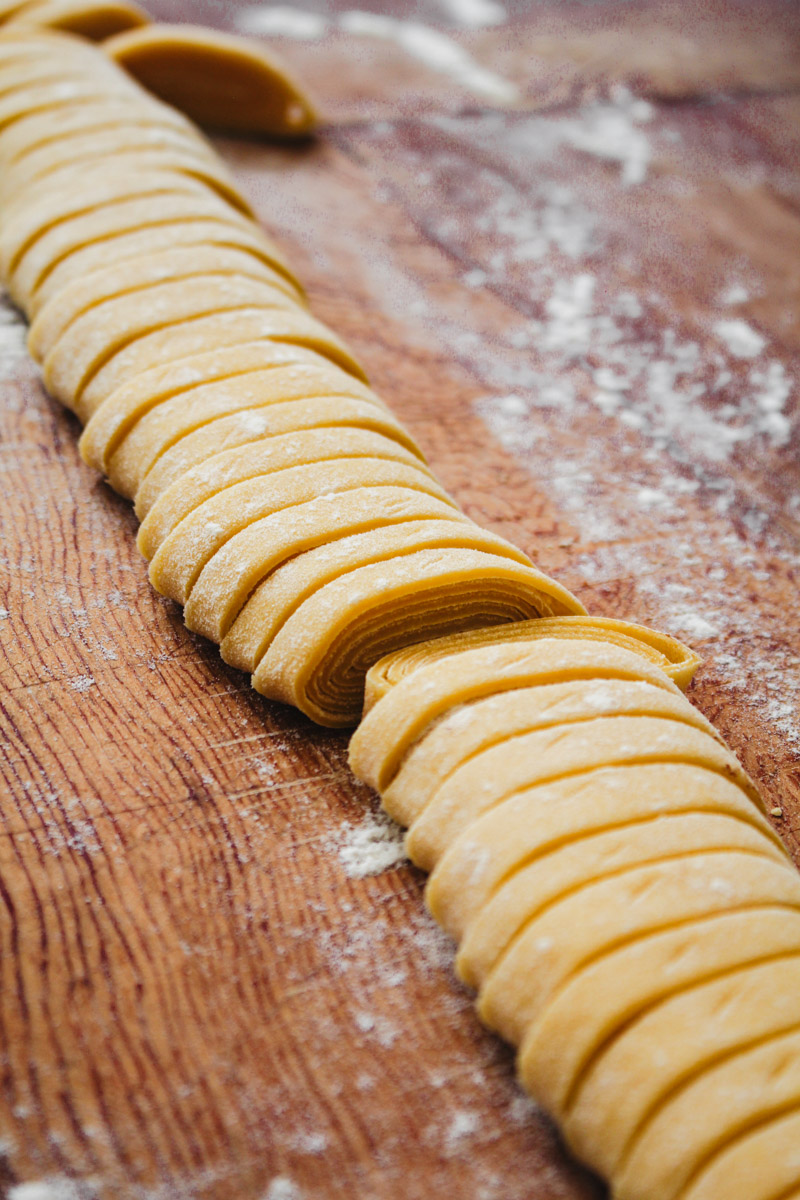
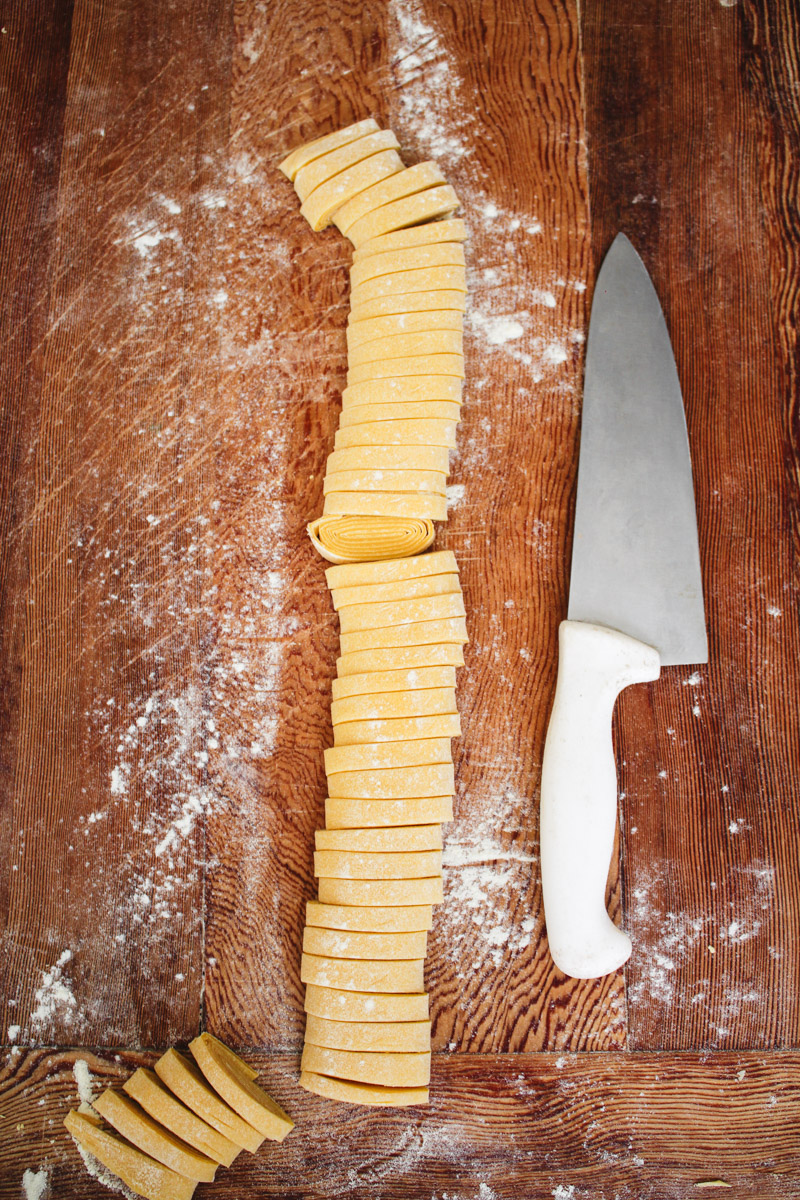
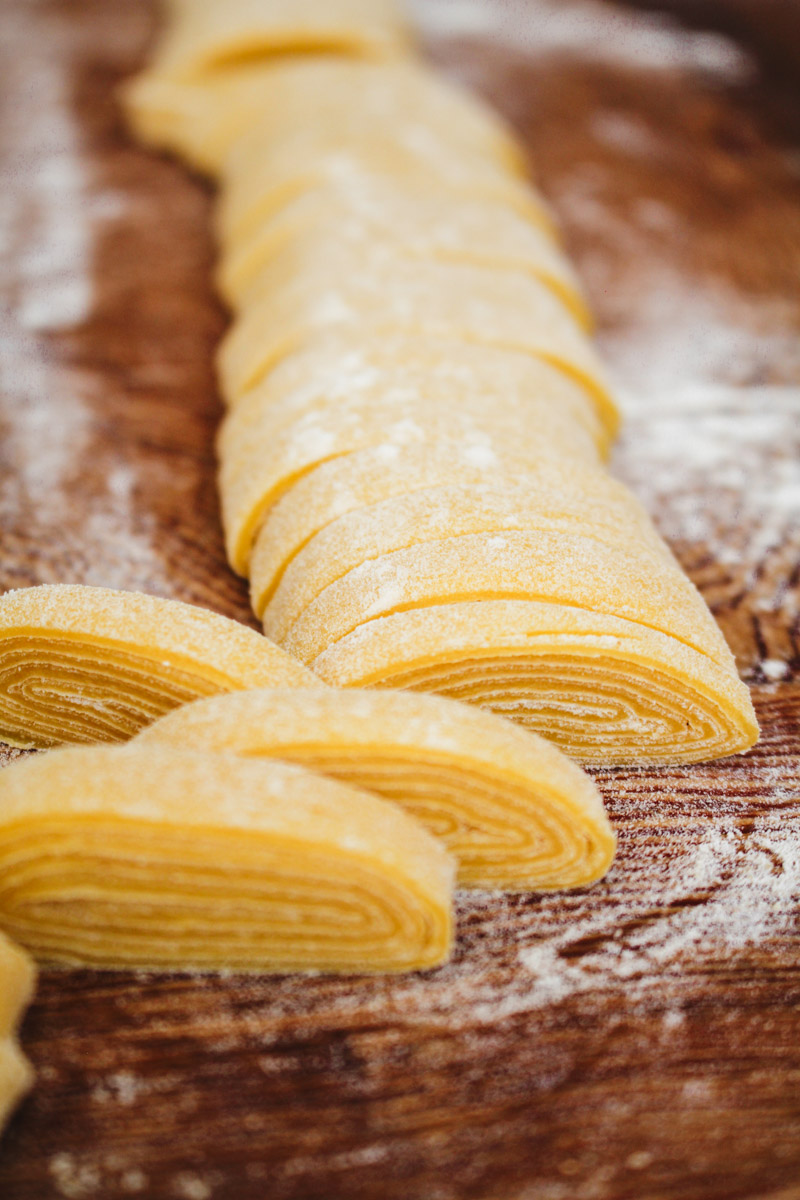
- Step 11-12: With a pizza or ravioli cutter, trim the circle of the pasta dough into an even edged square. Dust the sheet lightly with flour. Fold the dough loosely rolling into a long log.
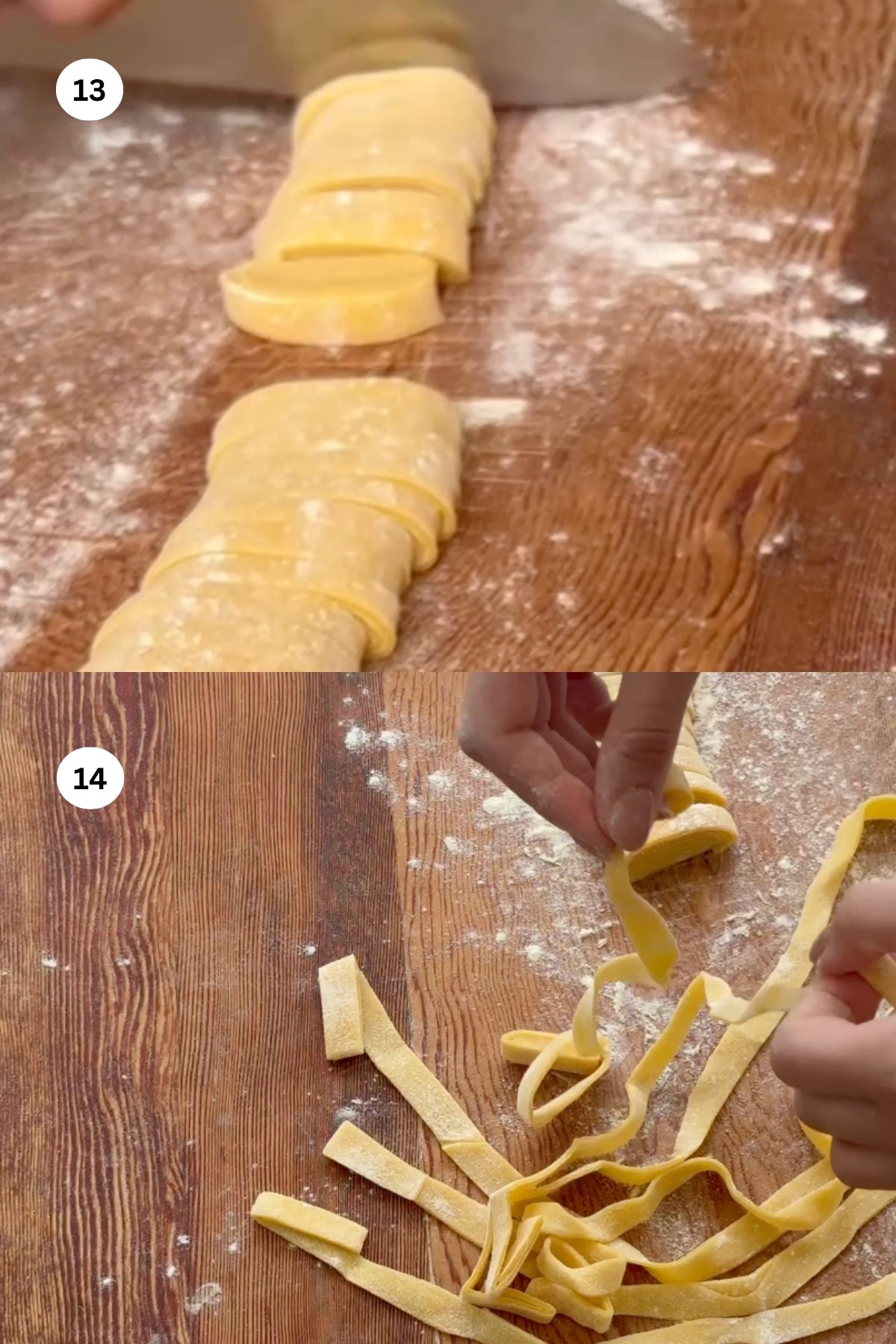
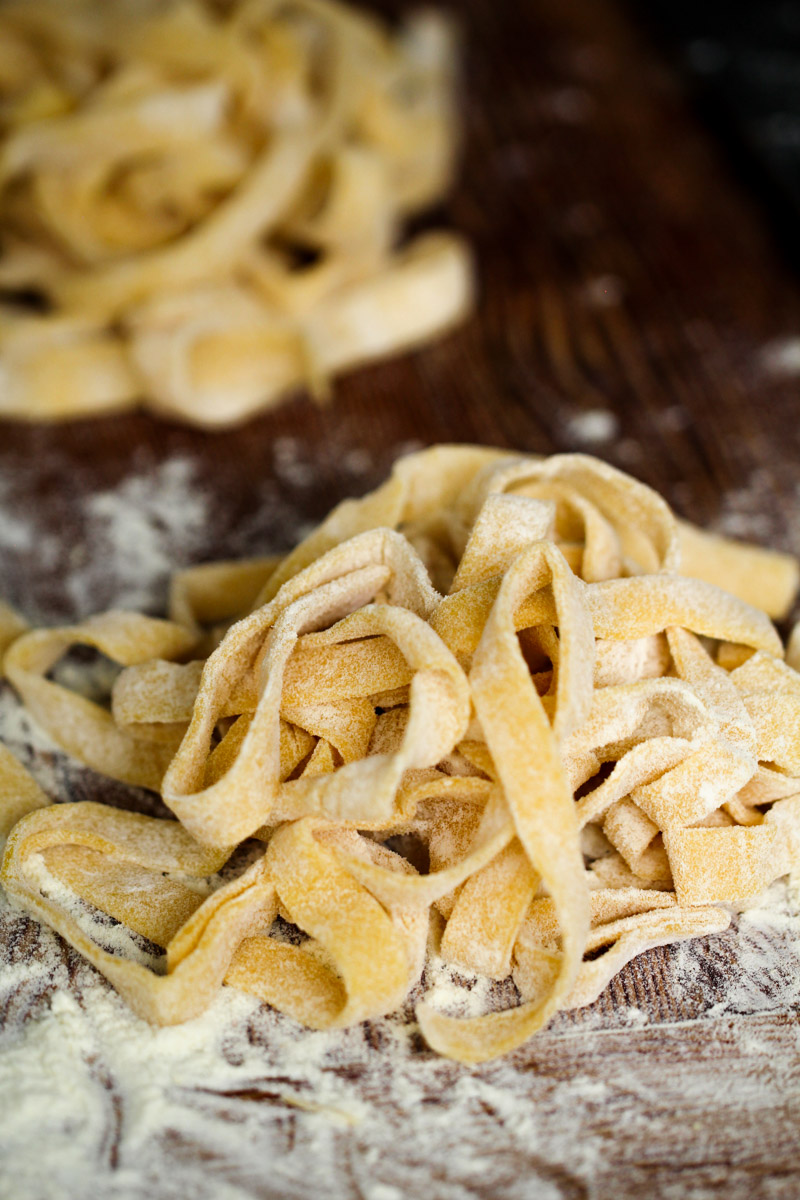
- Step 13-14: Cut into tagliatelle. With a sharp knife, cut the strips of tagliatelle and slice into 1 cm (½-inch) ribbons. Unroll them into long, beautiful tagliatelle noodles.
- Cook the pasta IF you are ready to enjoy the pasta, go ahead and cook it up! Bring salted water to a boil. Fresh tagliatelle cooks in 2–3 minutes. Drain and toss with sauce immediately.
How long fresh tagliatelle lasts (not dried):
- In the fridge: 1–2 days
- In the freezer: 2–3 months
Fresh pasta spoils quickly because of the eggs and moisture, so refrigeration is only a short-term option.
How to store fresh tagliatelle in the fridge:
- Dust the tagliatelle lightly with flour so the strands do not stick.
- Form into loose nests.
- Place the nests on a tray in a single layer and chill uncovered for 10–15 minutes to firm up.
- Transfer to an airtight container.
- Store for up to 48 hours.
How long does dried fresh tagliatelle last?
Fresh tagliatelle lasts longer when you let it dry properly, but the timing depends on how you dry and store it.
How long does it last when dried:
If you lay the fresh tagliatelle out in a single layer and let it dry completely (no moisture left at all), it keeps for up to 1–2 weeks at room temperature. The key is that it must be fully dry and crisp, not flexible.
How to dry it:
- Spread the pasta strands on a floured baking sheet or hang them on a pasta rack.
- Let them dry for 12–24 hours, depending on humidity.
- They should snap cleanly when bent.
How to store it:
- Once completely dry, place the pasta in an airtight container.
- Add a light dusting of flour inside the container so the strands stay separate.
- Keep it in a cool, dark spot (inside a pantry or cupboard).
If you want longer storage:
Freeze it instead. Fresh tagliatelle freezes beautifully for up to 2–3 months. Just coil the nests, freeze on a tray, then store in a container or freezer bag.
Substitutions & Variations
- Use 00 flour to get a silkier, smoother dough. It works well mixed 50/50 with semolina.
- Use all-purpose flour if you want a softer, more tender pasta. It absorbs less water, so add liquid slowly.
- Make spinach tagliatelle by blending cooked spinach with the eggs.
- Add a splash of olive oil Add a splash if the dough needs moisture or if you want a slightly more tender noodle.
- Make tagliatelle verdi with herbs mixed into the dough.
- Swap part of the flour with whole-wheat flour for rustic tagliatelle.

Pro Tips for Perfect Fresh Tagliatelle
- Use the flour you have: “00” flour gives the smoothest texture, but you can absolutely use all purpose flour. It still makes excellent tagliatelle.
- Weigh your ingredients: Flour absorbs liquid differently, so weigh your flour for accuracy. A classic ratio is 100 grams of flour per 1 egg.
- Make a firm dough: Tagliatelle dough should feel firm and slightly tacky, not sticky. If it sticks to your hands, dust with a little more flour. If it feels dry, wet your fingertips and knead briefly.
- Knead long enough: Knead for 8–10 minutes until the dough becomes smooth and springs back when pressed. This builds the gluten needed for strength and elasticity.
- Rest the dough: Wrap the dough tightly and let it rest for 30 minutes. This relaxes the gluten so it rolls out easily without shrinking.
- Roll it thin: Roll the dough until you can see light through it. Make sure you also roll the dough evenly. Tagliatelle should feel delicate but not overly fragile.
- Use plenty of flour when cutting: Dust both sides of your sheets with flour before folding or rolling to cut. This prevents the strands from sticking.
- Loosen the strands immediately: After cutting, gently shake and separate the tagliatelle with your fingers. Dust again lightly with flour so they stay loose.
- Cook in heavily salted water: Salt the water generously. Fresh pasta absorbs flavor quickly, so this step makes a big difference.
- Do not overcook: Fresh tagliatelle cooks fast—2 to 3 minutes is usually just right. Taste early.
- Finish in the sauce: Move the tagliatelle straight from the pot into your sauce with a splash of pasta water. It helps the sauce cling and turn silky.
- Serve immediately: Fresh pasta is best enjoyed right away for the perfect texture.
FAQ's
Yes. You can roll it by hand with a rolling pin.
About 1 mm thick before cutting; the final ribbons should be 1 cm wide.
Yes. Freeze in small nests on a tray, then transfer to a bag.
Bolognese, mushroom, butter and sage, creamy mushroom, pesto, or even simple tomato sauces.
Storing & Freezing
- Refrigerate: Up to 2 days, dusted with flour.
- Freeze: Lay the tagliatelle in small nests and freeze for up to 2 months.
- Dry: Leave on racks for 24 hours and store in an airtight container for weeks.
More Pasta Recipes to Try
Did you make this and love it? Please RATE THE RECIPE below:)
I would LOVE if you can leave me a star rating and a review down below and let me know your thoughts! It means the world to me to hear how you like it.
Please Subscribe and give a follow on Instagram, Facebook, Pinterest, and TikTok xx
📖 Recipe
📖 Recipe
Homemade Tagliatelle Pasta (Fresh Tagliatelle Recipe)
Equipment
- 1 large bowl
- 1 Sharp Knife
- 1 Pizza Cutter or ravioli cutter
Ingredients
- ½ kilo semolina flour you could use all purpose or 00 flour. ½ kilo is 500 grams or around 4.25 cups
- 10 egg yolks
- 1 teaspoon sea salt
Instructions
Make the dough
- Separate the egg yolks from the whites and place the yolks in a bowl. Add the flour and salt. Pour the yolks into the flour and stir with a wooden spoon to bring the dough together. When it becomes shaggy, switch to your hands and start kneading. The dough will feel firm at first.
Knead until smooth
- Transfer the dough to a clean work surface and knead for 8–10 minutes until it becomes smooth, elastic, and slightly springy.
Rest
- Wrap the dough tightly and let it rest in the refrigerator for one hour. This relaxes the gluten and makes rolling much easier. Remove the dough from the fridge and unwrap when ready to roll.
Roll
- Place the dough on a lightly floured surface and roll it out with a rolling pin or pasta machine. Roll into long thin sheets; for tagliatelle, stop at about setting #5 on most pasta rollers. Trim the edges into an even square, dust with flour, and loosely fold or roll the sheet into a long log.
Cut
- Use a sharp knife to slice the dough into 1 cm (½-inch) ribbons. Unroll each strip into long tagliatelle noodles.
Cook
- Bring salted water to a boil. Add the fresh tagliatelle and cook for 2–3 minutes until tender. Drain and toss immediately with your sauce of choice.
Nutrition Disclaimer
Please keep in mind that the nutritional information presented below is an approximation and may vary depending on the exact ingredients used.
Notes
- This dough is made using semolina flour. Use all purpose flour or 00 flour. If you don’t have “00” pasta flour—your tagliatelle will still turn out beautifully.
- The dough should feel firm, not sticky.
- Add flour sparingly if it clings to your hands. If the dough feels dry, wet your fingertips and knead a few seconds to adjust.
- Resting is essential; it makes the dough easier to roll thin without shrinking back.
- Dust with flour during rolling and cutting so the sheets and strands stay loose.
- Fresh pasta cooks fast, so taste at the 2-minute mark for perfect texture.
- Finish pasta in the sauce with a splash of pasta water so it becomes silky and well-coated.
Deb says
I made these noodles using fresh milled flour and everyone in my family loved them! Making noodles was actually much easier than I imagined, thanks for the excellent recipe!
sofia says
I have a thing for Italian food, but making pasta at home? It sounded too difficult for me. That said, I decided to give this recipe a try. So easy and delicious. I can't believe I did it!
Linda says
This was so much fun to make and the results were AMAZING! Seriously a perfect recipe.
Adele says
It's interesting to see and read about the details on how authentic tagliatelle pasta is made and how soft and tender it turns out; I'm looking forward to trying it soon.
Charlie says
I have to admit that I thought that making pasta at home was way more complicated. This tagliatelle pasta is simple and delicious.
Pete says
Love fresh pasta made from scratch. It has a completely different texture than store bought and is so worth it.
Jane says
This is a really easy to make pasta recipe. The ribbons have a beautiful color and a lovely flavor!
Laura says
This homemade tagliatelle is beautifully fresh and silky with that perfect handmade texture. Such a simple yet impressive dish that’s totally worth the effort!