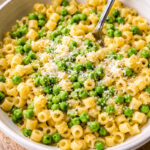
Pasta and Peas (Italian Pasta e Piselli)
If you want something quick, cozy, and genuinely satisfying, this pasta with peas recipe is one of those dishes you’ll keep coming back to. It’s simple, but done right, it’s really good.
Servings: 4 servings
Calories: 321kcal
Equipment
- 1 Sharp Knife
- 1 large sauce pan or Dutch oven
Ingredients
- 11 oz ditalini or another type of small pasta
- 1 Tablespoon extra virgin olive oil
- 1 large shallot finely chopped
- 1 lb fresh or frozen peas
- ½ teaspoon sea salt
- ½ teaspoon freshly ground black pepper
- 1 cup freshly grated parmesan plus extra for serving
- Handful fresh basil or fresh Italian parsley optional
- Guanciale or pancetta optional cut in small pieces and cooked until crispy to add on top when finished
Instructions
Cook the pasta
- Bring a large pot of water to a boil and salt it. Cook the pasta making sure it's not quite al dente (so about 1 minute less than the cooking time, because you'll be combining in the skillet with the sauce and heating together and it will cook a little more).
- While the pasta is cooking, prep the pea sauce.
Make pea sauce
- Heat olive oil in a large skillet over medium heat. Add the shallots. Cook, stirring occasionally, until the shallots have become translucent and have totally softened, 5 to 8 minutes.
Add peas
- Add in the peas and season with salt and pepper.
Add pasta water
- Scoop out 1 cup of the starchy pasta water and add ½ cup of the water to the sauce. Stir to combine.
Drain the pasta and combine
- Drain the pasta well and immediately add the pasta to the pan with pea sauce. On medium heat, give it a nice stir to combine it all together. If it's too thick, loosen it with a little bit of the reserved pasta water and stir it all together. Add in some fresh sage (or Italian parsley)and stir to combine.
Grated cheese
- Grate on some Parmigiano Reggiano (or pecorino).
Serve
- Plate up your pasta and serve more grated Parmigiano, if you like. Enjoy!
Nutrition Disclaimer
Please keep in mind that the nutritional information presented below is an approximation and may vary depending on the exact ingredients used.
Notes
- Salt your pasta water well: This is your only chance to season the pasta itself. It should taste like the sea.
- Undercook the pasta slightly: Finish cooking it in the pan with the peas so everything blends together and absorbs flavor.
- Use starchy pasta water: That reserved water helps create a silky, lightly creamy sauce without cream.
- Fresh vs frozen peas: Both work great. Frozen peas are convenient and still sweet, just don’t overcook them.
- Shallots over onions: They give a softer, slightly sweeter flavor that works better in this dish.
- Adjust consistency: If the pasta feels dry, add more pasta water a little at a time until it loosens up.
- Cheese matters: Use freshly grated Parmigiano Reggiano for the best flavor and melt.
- Guanciale or pancetta (optional): Cook in small pieces until crispy, then use the rendered fat to build the sauce for extra depth.
- Herbs are optional but worth it: Fresh parsley or basil adds brightness at the end.
- Serve immediately: This pasta is best hot, right after mixing, while the sauce is still silky.
Nutrition
Calories: 321kcal | Carbohydrates: 58g | Protein: 10g | Fat: 5g | Saturated Fat: 1g | Polyunsaturated Fat: 1g | Monounsaturated Fat: 3g | Sodium: 295mg | Potassium: 177mg | Fiber: 3g | Sugar: 2g | Vitamin A: 1IU | Calcium: 18mg | Iron: 1mg
Tried this recipe?Mention @savoringpasta or tag #savoringpasta!