
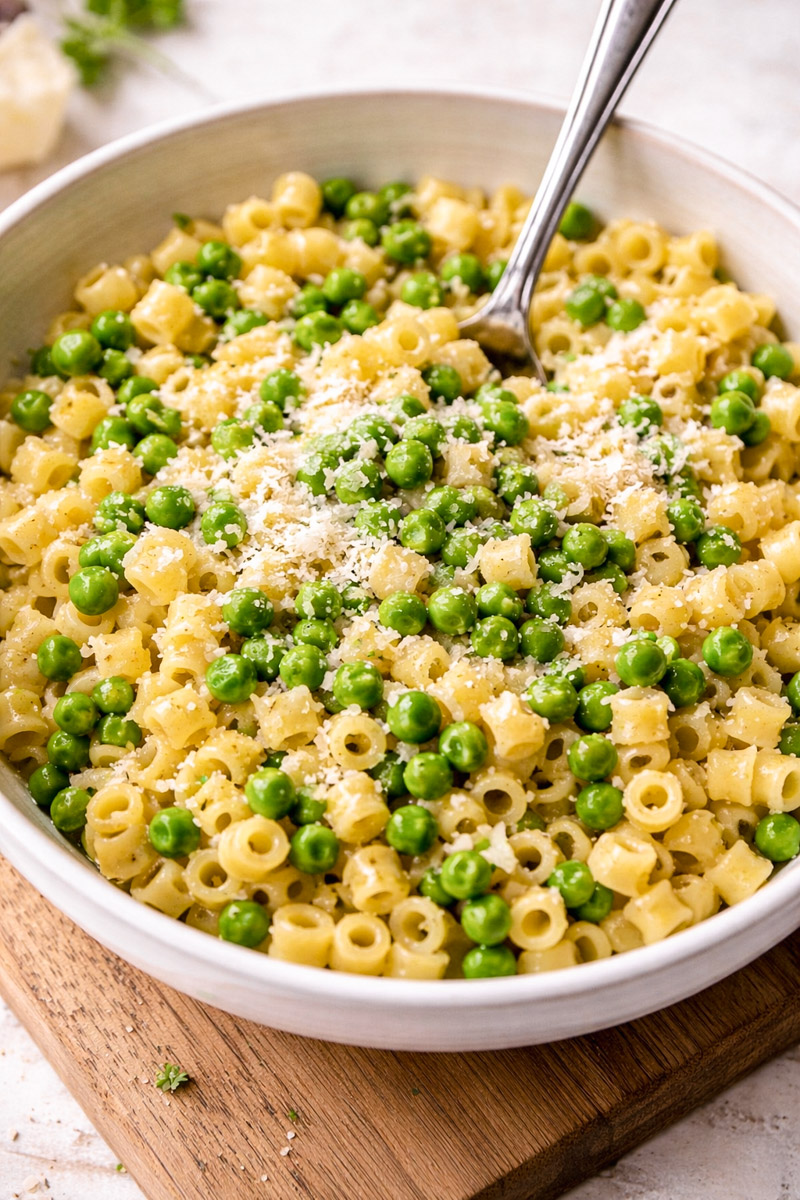
If you want something quick, cozy, and genuinely satisfying, this pasta with peas recipe is one of those dishes you’ll keep coming back to. It’s simple, but done right, it’s really good.
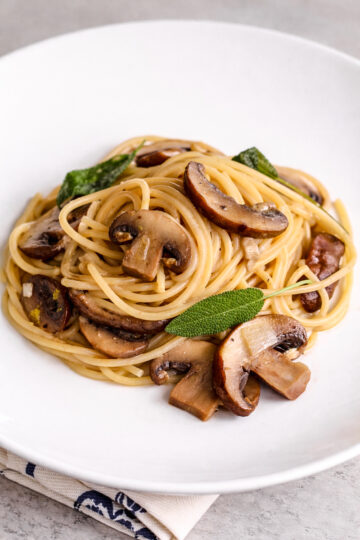
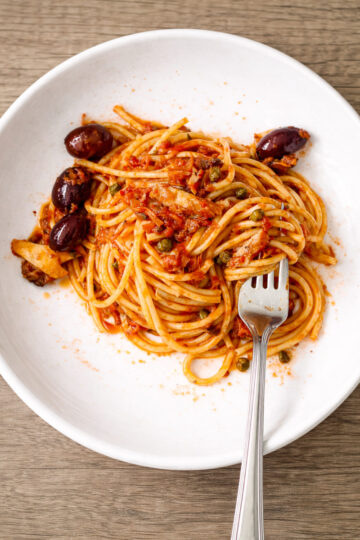
If you like this recipe, you might like my Easy Mushroom Pasta and my Pasta alla Zozzona.
This article contains affiliate links that support us at no extra cost to you.
Jump to:
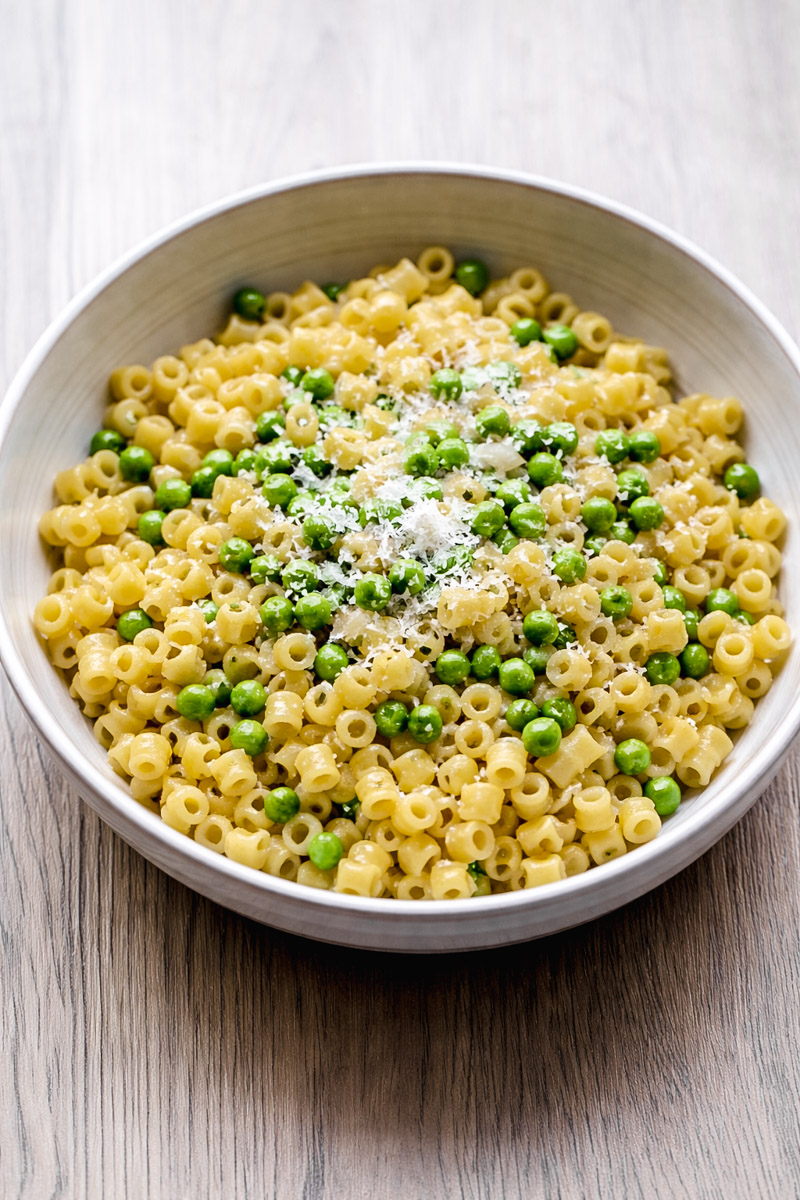
Hi!!! This pasta and peas is one of those classic Italian dishes that proves simple ingredients can still feel special. It’s creamy, comforting, and comes together fast with pantry staples like pasta, peas, olive oil, and a little cheese.
I grew up eating versions of this, and it’s still one of the recipes I make when I want something easy but satisfying. For me, the best pasta and peas recipe has a slightly creamy texture, not dry, not soupy. That balance is what makes it so good.
Why this pasta and peas works
- Uses simple, affordable ingredients
- Comes together in under 30 minutes
- Naturally creamy without heavy cream
- Classic comfort food in Italian cooking
If you’ve been looking for an authentic Italian pasta with peas, this is exactly how it’s meant to be made.
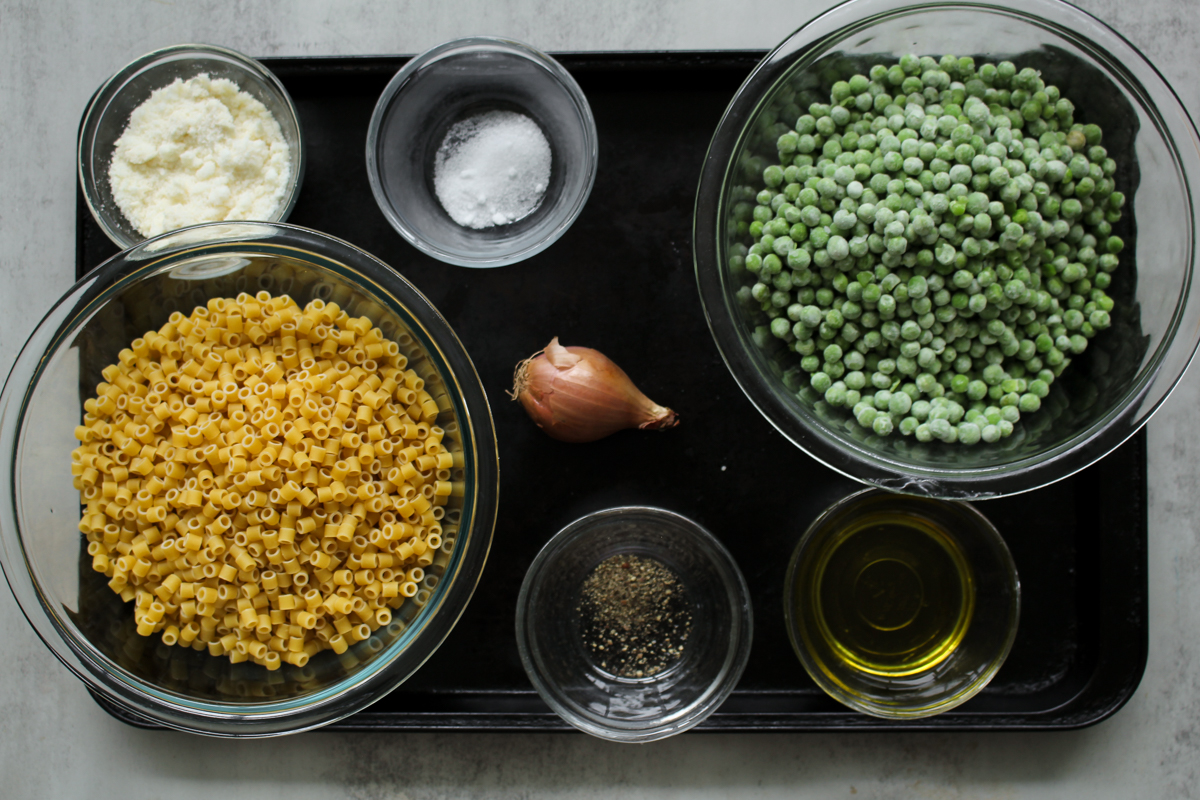
Ingredient Notes
- Pasta – Small shapes work best, but any pasta works
- Green peas – Fresh or frozen, both work great
- Extra virgin olive oil – Use a good quality oil for best flavor
- Shallot – Or substitute with white, yellow, or sweet onion
- Starchy pasta water – Helps create a light, silky sauce
- Sea salt – Enhances all the flavors
- Freshly ground black pepper – Adds a subtle kick
- Parmigiano Reggiano – Or Pecorino Romano for a sharper finish
How to make pasta e piselli
First thing to do is gather the ingredients.
Cook the pasta
Before you begin the easy pea sauce, cook the pasta. In a large pot of salted water, cook the pasta until it's just before being al dente.
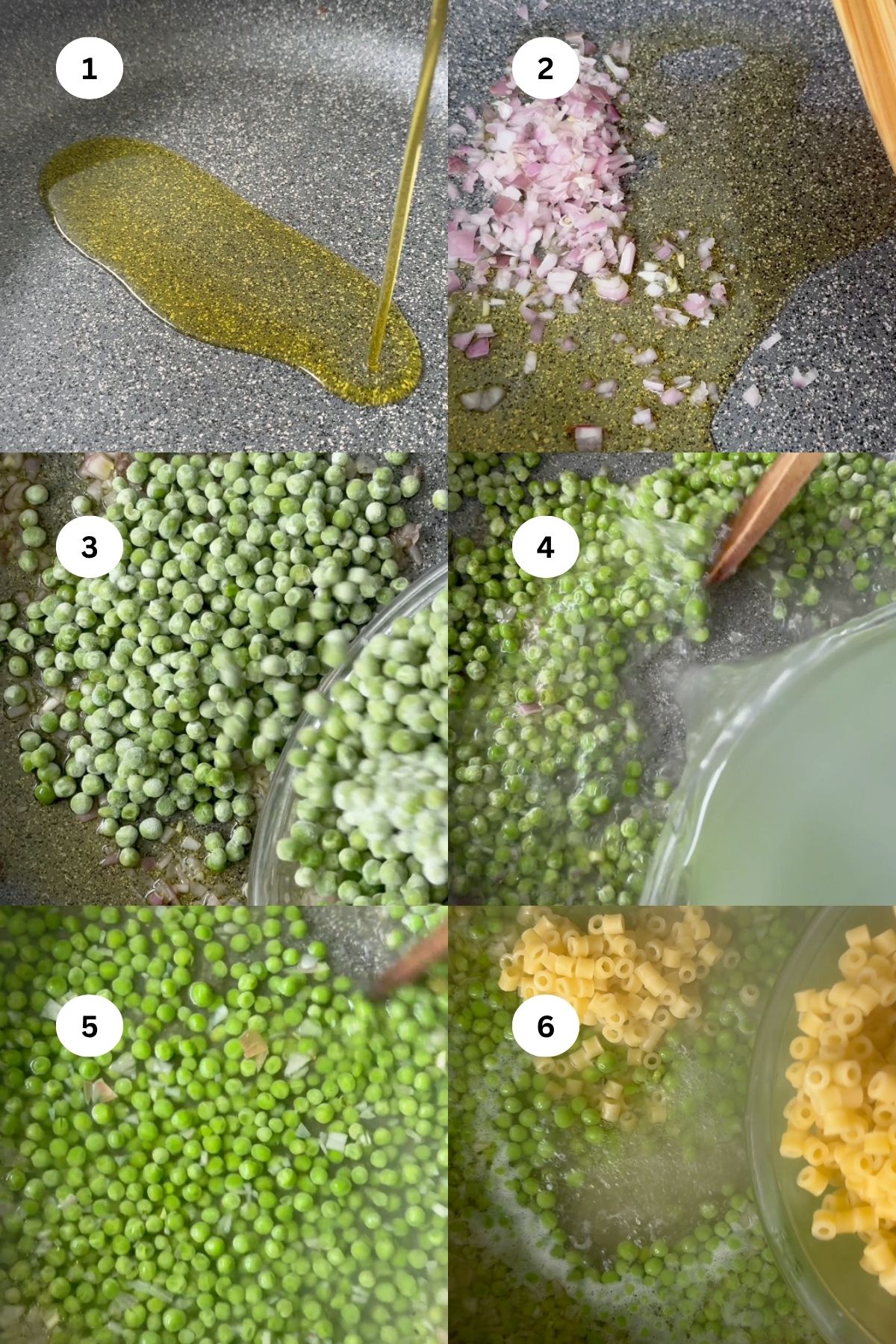
1. Cook the base
Heat olive oil in a pan.
2. Add shallots
Add the chopped shallot and cook until soft and translucent.
3. Add peas
Stir in the peas and cook for a few minutes to build flavor. Season with salt and pepper.
4-5. Add pasta water
Pour in the starchy pasta water and bring to a simmer. Stir to combine.
6. Combine
Once the pasta is just before al dente, add to the pea sauce. Stir to combine. Add in some grated Parmigiano Reggiano. Serve and enjoy!
📃 NOTE: Recipe card with detailed instructions are below! Print it out for later!
Cook pasta e piselli in one pot
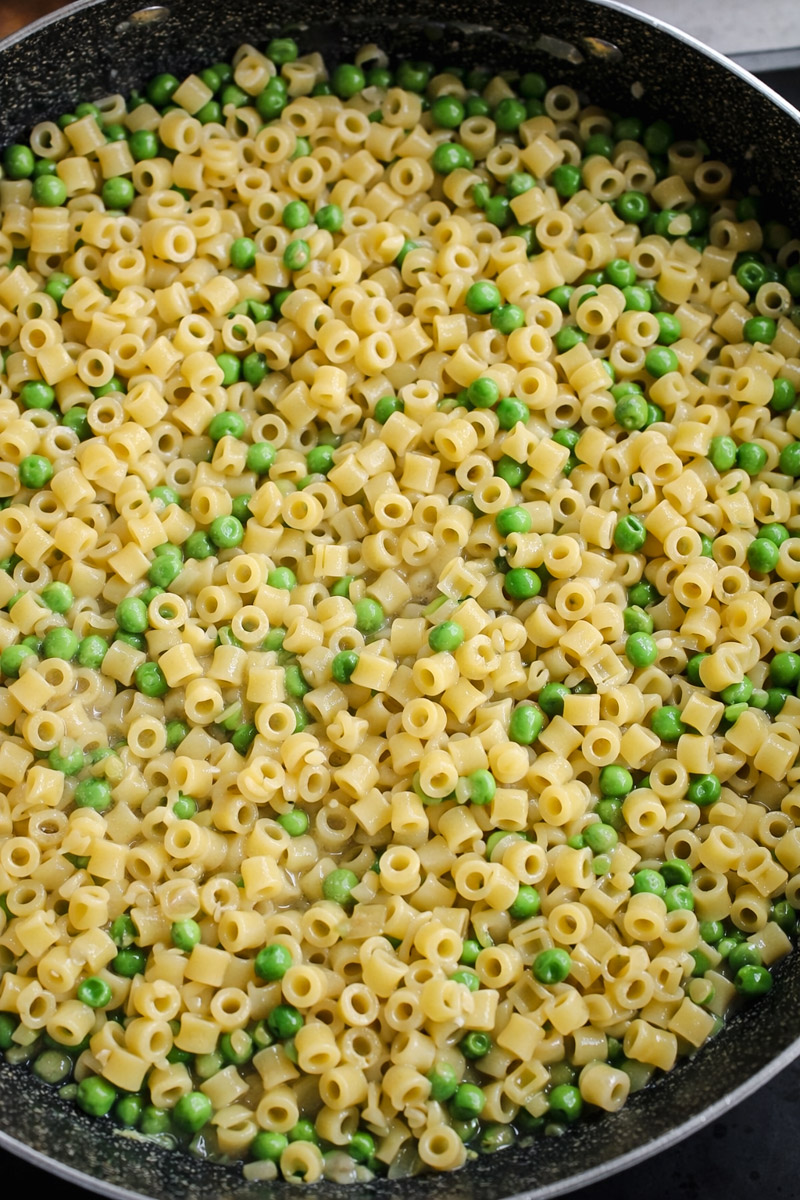
You can make this pasta e piselli all in one pot, which is perfect for a simple, cozy meal. That said, I don’t love cooking it this way. I prefer to parboil the pasta for about 5 minutes first, then transfer it to the pan with the peas to finish cooking. This gives you that starchy pasta water, which creates a naturally creamy texture without adding anything extra.
If you do want to cook it all together, you can add the dry pasta with about 4 cups (1 liter) of water to the peas and let it simmer until the pasta is al dente. Just keep an eye on it and add more water as needed so it stays smooth and doesn’t dry out.
My tips for the best pasta and peas
- Cook pasta in the same pot: To keep it very simple, you could cook it all in one pot. This releases starch and creates that creamy texture without cream. I personally prefer to cook it separately, and add it to the pea sauce with some starchy pasta water.
- Do not overcook the peas: You want them bright and slightly sweet, not dull and mushy.
- Adjust the liquid: Add more pasta water if needed. This dish should be creamy, not dry.
- Use good Parmigiano Reggiano: It makes a big difference in flavor. I would NOT recommend to use Parmesan cheese. Use pecorino Romano or Grana Padana as alternative to Parigiano.
Variations to try
This peas and pasta recipe is super flexible:
- Add pancetta for a classic Italian version
- Make it vegetarian with vegetable broth
- Add fresh herbs like parsley or basil
- Stir in a knob of butter at the end for extra richness
Storing & Freezing
- Refrigerate: Let the pasta cool completely, then store in an airtight container in the fridge for up to 3 days.
- Do not freeze: Freezing is not recommended. The peas can turn mushy and the pasta texture becomes soft and grainy once thawed.
FAQ'S
It’s a traditional Italian pasta and peas dish made with pasta, peas, broth, and cheese. It’s simple, comforting, and very common in Italian homes.
Yes, but without cream. The starch from the pasta and broth creates a naturally creamy texture.
Yes, they work perfectly and are often used in pasta with green peas recipes.
Small pasta shapes like ditalini or small shells are traditional, but you can use what you have.
What to serve with this recipe
Pasta with peas is simple comfort food and it goes really nicely with any roasted vegetable, side dish, or even bread.
- Italian Caprese Salad >>> Super fast to make, this one of my favorites!
- Insalata mista >>> Really easy and quick, you'll love this Italian salad.
- Cucumber salad >>> Fresh and crisp, this is a very nice side dish for the pasta.
- Panzanella Toscana >>> A super easy Tuscan salad that is delicious.
- Crusty bread >>> Always a good idea to have grea bread.
- Rosemary breadsticks >>>Easy homemade breadsticks are just so tasty!
More Pasta Recipes to Try
Did you make this and love it? Please RATE THE RECIPE below:)
I would LOVE if you can leave me a star rating and a review down below and let me know your thoughts! It means the world to me to hear how you like it.
Please Subscribe and give a follow on Instagram, Facebook, Pinterest, and TikTok xx
📖 Recipe
Pasta and Peas (Italian Pasta e Piselli)
Equipment
- 1 Sharp Knife
- 1 large sauce pan or Dutch oven
Ingredients
- 11 oz ditalini or another type of small pasta
- 1 Tablespoon extra virgin olive oil
- 1 large shallot finely chopped
- 1 lb fresh or frozen peas
- ½ teaspoon sea salt
- ½ teaspoon freshly ground black pepper
- 1 cup freshly grated parmesan plus extra for serving
- Handful fresh basil or fresh Italian parsley optional
- Guanciale or pancetta optional cut in small pieces and cooked until crispy to add on top when finished
Instructions
Cook the pasta
- Bring a large pot of water to a boil and salt it. Cook the pasta making sure it's not quite al dente (so about 1 minute less than the cooking time, because you'll be combining in the skillet with the sauce and heating together and it will cook a little more).
- While the pasta is cooking, prep the pea sauce.
Make pea sauce
- Heat olive oil in a large skillet over medium heat. Add the shallots. Cook, stirring occasionally, until the shallots have become translucent and have totally softened, 5 to 8 minutes.
Add peas
- Add in the peas and season with salt and pepper.
Add pasta water
- Scoop out 1 cup of the starchy pasta water and add ½ cup of the water to the sauce. Stir to combine.
Drain the pasta and combine
- Drain the pasta well and immediately add the pasta to the pan with pea sauce. On medium heat, give it a nice stir to combine it all together. If it's too thick, loosen it with a little bit of the reserved pasta water and stir it all together. Add in some fresh sage (or Italian parsley)and stir to combine.
Grated cheese
- Grate on some Parmigiano Reggiano (or pecorino).
Serve
- Plate up your pasta and serve more grated Parmigiano, if you like. Enjoy!
Nutrition Disclaimer
Please keep in mind that the nutritional information presented below is an approximation and may vary depending on the exact ingredients used.
Notes
- Salt your pasta water well: This is your only chance to season the pasta itself. It should taste like the sea.
- Undercook the pasta slightly: Finish cooking it in the pan with the peas so everything blends together and absorbs flavor.
- Use starchy pasta water: That reserved water helps create a silky, lightly creamy sauce without cream.
- Fresh vs frozen peas: Both work great. Frozen peas are convenient and still sweet, just don’t overcook them.
- Shallots over onions: They give a softer, slightly sweeter flavor that works better in this dish.
- Adjust consistency: If the pasta feels dry, add more pasta water a little at a time until it loosens up.
- Cheese matters: Use freshly grated Parmigiano Reggiano for the best flavor and melt.
- Guanciale or pancetta (optional): Cook in small pieces until crispy, then use the rendered fat to build the sauce for extra depth.
- Herbs are optional but worth it: Fresh parsley or basil adds brightness at the end.
- Serve immediately: This pasta is best hot, right after mixing, while the sauce is still silky.
Jane says
Simple but delicious. Our whole family even the kiddos like this one.
Gabby says
Hi Jane-Thanks for letting me know you that your whole family enjoyed it!
Hanna says
This Pasta and Peas recipe was so simple to make and turned out incredibly comforting. The combination of tender pasta, sweet peas, and savory flavors made it a perfect easy weeknight meal that I'll definitely make again!
Gia says
So quick and easy, but also delicious!
Mike says
So simple and comforting. Made this on a cold night and it hit the spot. My kids ate every bite. Will be in our regular rotation.